



Feature: The best Swiss watch brands
Since the 17th century Switzerland has been a horological power-house, with almost every leading contemporary luxury watch brand establishing itself in the country between then and the early 20th century. Its British counterparts gave a good account of themselves during this period, but by the end of World War One the Swiss were dominant.
That is, until the Japanese rained on their parade in the 1970s with the introduction of cheap quartz watches, the accuracy of which no mechanical timepiece could ever equal. But Switzerland prevailed and is home once again to innumerable brands—some new, some revived after years of dormancy, and some that never went away.
Here, in no particular order, are the very best mainstream brands from the country that refuses to budge as the world’s top watchmaking nation.
Patek Philippe
Still independently owned by the Stern family, the dial makers who bought it from the Philippe family after the Wall Street crash of 1929, Patek Philippe is a name that invokes respect and reverence in equal measure. When wealthy bankers like Henry Graves and James Ward Packard battled it out in the early 20th century to see who could commission the most complicated timepiece, it is Patek Philippe to whom they turned to bring their horological fantasies to life, paying astronomical sums for the pleasure.

Patek Philippe makes some of the world's most complicated timepieces
Patek Philippe still makes some of the world’s most complicated timepieces but it’s the simpler models their clients now crave, such as the sport-luxe Nautilus and the Bauhaus-inspired Calatrava. Along with Audemars Piguet and Vacheron Constantin, Patek Philippe makes up the “Holy Trinity” of watchmaking.
Audemars Piguet
“AP”, as it’s commonly referred to, secured its place in the pantheon of great watchmakers shortly after it was founded in 1875. Since then, its factory in Le Brassus, near Geneva, has been a hive of constant innovation, making the first wristwatch movement with a minute repeater in 1892 and spawning a whole new genre of watch in the 1970s with the distinctive Royal Oak.

The highly influential Royal Oak is Audemars Piguet's flagship model
In more recent years, the brand was instrumental in triggering the trend for bigger watches and hasn’t shied away from using innovative hi-tech materials for its sportier models. Its futuristic limited-edition Royal Oak Concept watches continue to make headlines with their incorporation of everything from 3-D super-heroes to extra-loud minute repeaters. It’s an exceptional brand that never rests on its laurels.
Vacheron Constantin
The world’s oldest continuously operating watch brand has much in common with its Holy Trinity rivals, including the ability to make record-breaking, complication-packed timepieces. Indeed, Vacheron Constantin holds the current record for the world’s most complicated watch, unveiling the Berkley Grand Complication pocket watch in 2024. It featured no less than 63 complications, one of which was the first-ever Chinese traditional perpetual calendar.

The iconic Overseas is the brand's best-known sport-luxe release
A little more conservative than Audemars Piguet, Vacheron Constantin’s watches are usually fashioned from traditional gold, platinum or steel, with the occasional titanium model to be found in the line-up. Its current families include the Fifty-Six, Traditionnelle and Overseas (pictured), while it has also revived the yellow-gold 222, a 1970s integrated sports watch with monobloc case. Brad Pitt owns one, and loves the design so much he went out and bought a similar vintage model in stainless steel.
Rolex
Switzerland has spawned more luxury watch brands than there are components in a minute repeater. Yet despite ferocious competition, Rolex is still the country’s perennial ace in the pack. While its watches may not have the detail, finishing and even prestige of some of its rivals, it’s the brand that’s most synonymous across the world with luxury Swiss watches and claims over 30 per cent of the retail market share, with annual sales of around $10 billion.

Rolex occasionally breaks free of its conservative shackles
Buying top models like the GMT-Master II, Daytona and Day-Date still requires joining a waiting list, and certain vintage Rolex watches are still among the biggest hitters at auction, along with Patek Philippe. Just don’t remind the Swiss that Rolex began life in London’s Hatton Garden.
Jaeger-LeCoultre
Should one of the so-called Holy Trinity ever cease to exist, Jaeger-LeCoultre would be a worthy replacement. The fact that Queen Elizabeth II wore a watch by Le-Coultre (as it was then called) for her 1953 coronation says everything about this hallowed brand, as does the fact that it has famously supplied movements to Cartier and Patek Philippe.

Among serious watch enthusiasts, Jaeger-LeCoultre is a revered name
Known as “the watchmaker’s watchmaker”, Jaeger-LeCoultre adheres to the very highest standards in horology, with watches that marry the decorative arts with technical ingenuity. Despite a diverse line-up that includes everything from dive models to ultra-thin dress watches, its flagship model is still the Reverso, an Art Deco-era model with a flip-over case designed to withstand the swinging mallets and hoofs of the polo field.
Omega
The Swatch Group’s flagship brand is an industry monster with an illustrious history stretching back to 1848 when it was founded by Louis Brandt. Initially called the Louis Brandt & Fils Company, it took on the Omega name around fifty years later on the sage advice of Brandt’s bank manager—and it’s a name that has served the company well.

The 60 Years Of James Bond Seamaster in white gold
Omega is now one of the world’s best-known luxury watch brands and is a marketeer’s dream thanks to its associations with the 1968 NASA moon landings and the James Bond film franchise. Wearing a watch worn by astronauts (the Speedmaster) or a watch worn by the world’s most famous fictional spy (the Seamaster) is an enticing prospect for watch buyers, and it helps ensure the brand’s fade-proof visibility.
Breitling
Whether you need a watch for land, air or sea, Breitling has you covered, but it’s aviation watches that the brand really excels at. In the 1930s, Willy Breitling, grandson of company founder Leon Breitling, launched a chronometer for instrument panels in aircraft cockpits, going on to supply them to the likes of Boeing and Lockheed.

The Navitimer is an aviation icon
The Navitimer, with its signature slide-rule bezel, followed in 1952, becoming the first Swiss wristwatch in space a decade later when it was worn by NASA astronaut Scott Carpenter in the Aurora 7 space capsule. Breitling’s contemporary line-up includes the above Navitimer family, as well as the Superocean, Premier and Chronomat series, with the brand regularly releasing heritage models that nod to its extensive back catalogue.
TAG Heuer
TAG Heuer is considered one of the more affordable luxury Swiss watch brands but that doesn’t detract from its greatness. For decades, sports chronographs produced by Heuer (as it was then called) were among the most accurate and dependable in the business, and its announcement this year that it will be taking over from Rolex as Formula One’s official timekeeper will catapult it back to the top tier of sports timekeeping. It’s a role the brand has held before, while it’s also been a timekeeper for the Olympics on several occasions.

The square-cased Monaco is one of many TAG Heuer motor-themed chronographs
In addition, legendary chronographs like the Monaco, Carrera and Monza have their very roots in motorsport racing. Sports heritage aside, credit must also be given to TAG Heuer for its efforts to maintain the spirit of technological innovation it has long been known for. Futuristic models like the Monaco V4 with its revolutionary belt-driven movement prove that innovation is still at the forefront of everything it does.
IWC
Geographically, Schaffhausen-based IWC is closer to Stuttgart in Germany than it is to the traditional watchmaking heartland of Geneva, and this distance from most of its Swiss watchmaking peers has helped it forge its own distinct identity over the years. The fact that IWC was founded by an American—the grandly named Florentine Ariosto Jones—also adds to its slightly maverick appeal.

IWC's location in Switzerland has helped it forge a distinct identity
Of course, most people associate IWC with no-frills pilots watches, but a deep-dive into its archives reveals all manner of styles, from elaborate 1920s Art Deco pieces to gold dress watches with enamelled dials. Today, IWC’s catalogue is as diverse as it’s ever been, and the brand’s Portugieser family is home to some incredibly complicated timepieces, including a recent ground-breaking eternal perpetual calendar that boasts a moonphase display accurate to 45 million years.
Breguet
The sacred name of Breguet, founded in 1775 by the “Godfather of watchmaking”, Abraham-Louis Breguet, lives on today under the auspices of the Swatch Group. Though not as visible or as profitable as Omega, Breguet is arguably the most prestigious brand in the group’s portfolio, and it’s treated accordingly. Suffice it to say that if there are any more Swatch collaborations in the offing, Breguet will be spared the honour lest the founder spin like a tourbillon in his grave.

Breguet was founded by the man regarded as the godfather of modern horology
Breguet is one of the great old-world watch brands and its classic models stand out for their signature features such as coin-edge cases, guilloche dials and “pomme” hands. However, for those Breguet fans who want a watch that doesn’t look like something from the 18th century, there’s the Type XX flyback chronograph to consider, an aviation watch developed in the 1950s for the French Air Force.
Cartier
Cartier was founded in Paris by Louis-François Cartier in 1847 and although it specialised in high-end jewellery and design, it went on to make an indelible imprint on the watchmaking industry.
One of its biggest feats is the invention of the first pilot’s wristwatch—the Santos—which was created for aviation pioneer, Alberto Santos-Dumont. Cartier is home to other legendary models including the Tank, Baignoire, Ballon Bleu, Panthère and the unusual Crash, with its “melted” case shape.

The Santos is widely considered to be the first pilot's wristwatch
These dainty timepieces are currently benefitting from the trend for smaller watches and showcase Cartier signatures such as Roman numerals, a blue cabochon crown and blued-steel hands.
In 1977, Cartier dedicated more resources to watchmaking by partnering with Ebel to create its own movements. By 2000, it opened its first manufacture in La Chaux-de-Fonds, Switzerland. In 2008 we finally got to see the first watch movement designed and produced entirely by Cartier via the Ballon Bleu series.
Panerai
Despite Panerai’s Italian heritage, it has been making its watches in Switzerland since 2002 when it opened the Panerai Manufacture in Neuchâtel.
Thanks to its design signatures—from extra-large cases with protruding crown guards to sandwich dials and luminescent numerals—Panerai boasts possibly one of the strongest visual identities of any of its competitors.

Panerai watches boast a strong visual identity
Its resilient watches even caught the attention of the Royal Italian Navy who depended on Panerai’s innovations like its trademark luminescent paint—Luminor—which helped divers read the time in lowlight conditions.
In 1993 Panerai finally released its watches to the civilian market and it soon developed an avid following, known as the “Paneristi”. Today, its big hitting models include the instantly recognisable Luminor, Radiomir and Mare Nostrum lines.
Ulysse Nardin
Ulysse Nardin is probably best known for its “Freak” timepiece. A substantial presence on the wrist, this incredible watch defies conventional movement wisdom by dispensing with hands and dial. Instead, the whole gear train rotates inside the case and serves as the minute hand. With no crown, the bezel and caseback can be turned to set and wind the watch, respectively.
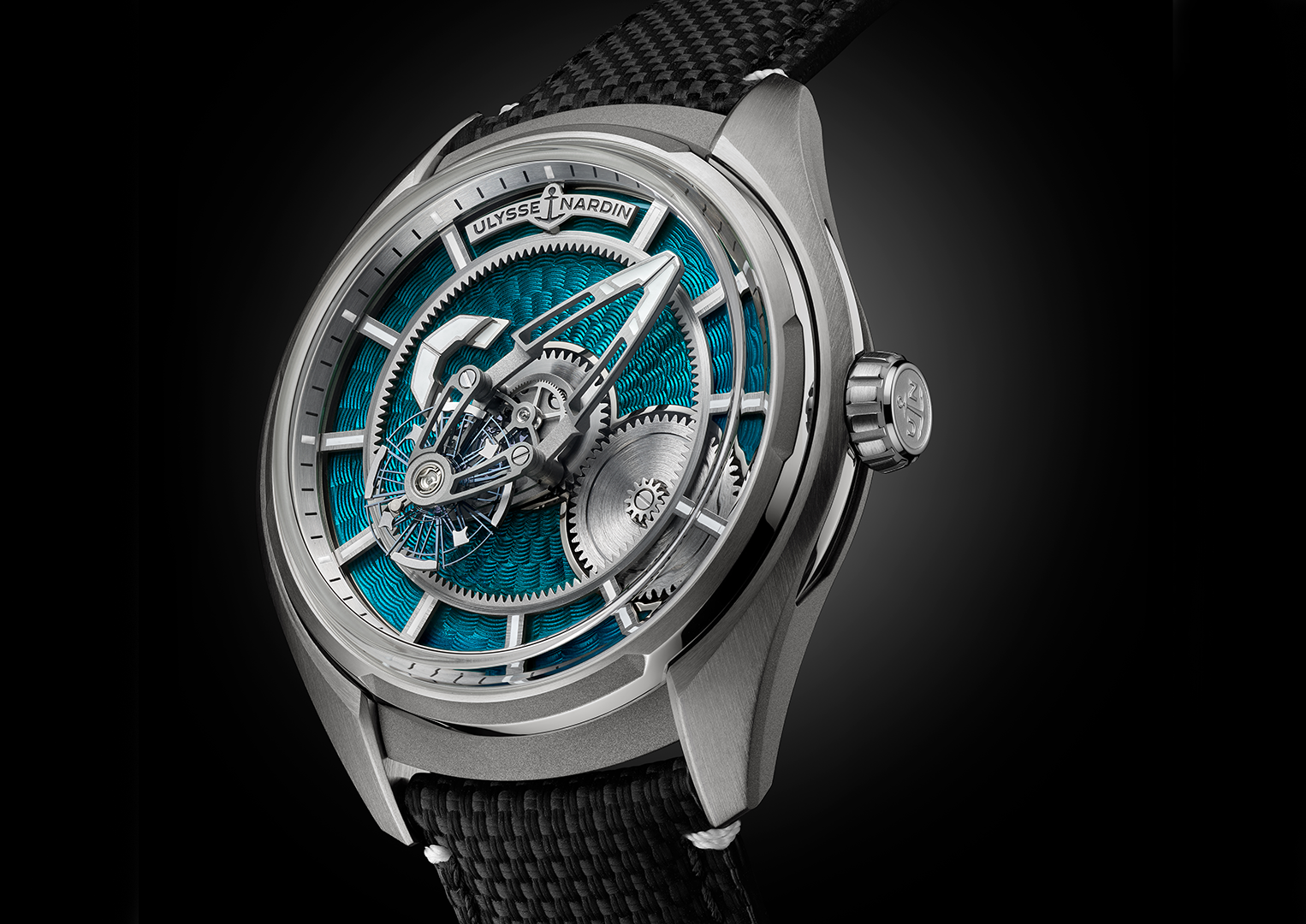
The ground-breaking Freak is unlike any other watch
All this wouldn’t have been possible had this ailing brand not been acquired in 1983 by a former Jaeger-LeCoultre executive called Rolf Schnyder, who enlisted expert watchmaker Ludwig Oeschlin to create a now-legendary series of astronomical watches and, much later, the ground-breaking Freak. For an old-world watchmaker that once excelled at making high-precision marine chronometers, it ensured Ulysse Nardin wasn’t just another luxury Swiss brand following the tried ‘n’ tested revival playbook.
While the Freak represents the more technologically advanced end of the brand’s line-up, more conventional models can be found in its simpler Marine and Diver collections.
Zenith
In 1975, with quartz-powered watches in the ascendant, Zenith employee Charles Vermot, was told by his company to sell off the machines that made its legendary El Primero mechanical chronograph movement. Vermot defied orders and instead hid the machines in a factory attic. There they remained until Rolex came calling in the 1980s, needing an automatic movement for its Daytona model. This is just one fabled chapter of the Zenith story, which has been running uninterrupted since the brand was founded in Le Locle by Georges Favres-Jacot in 1865.
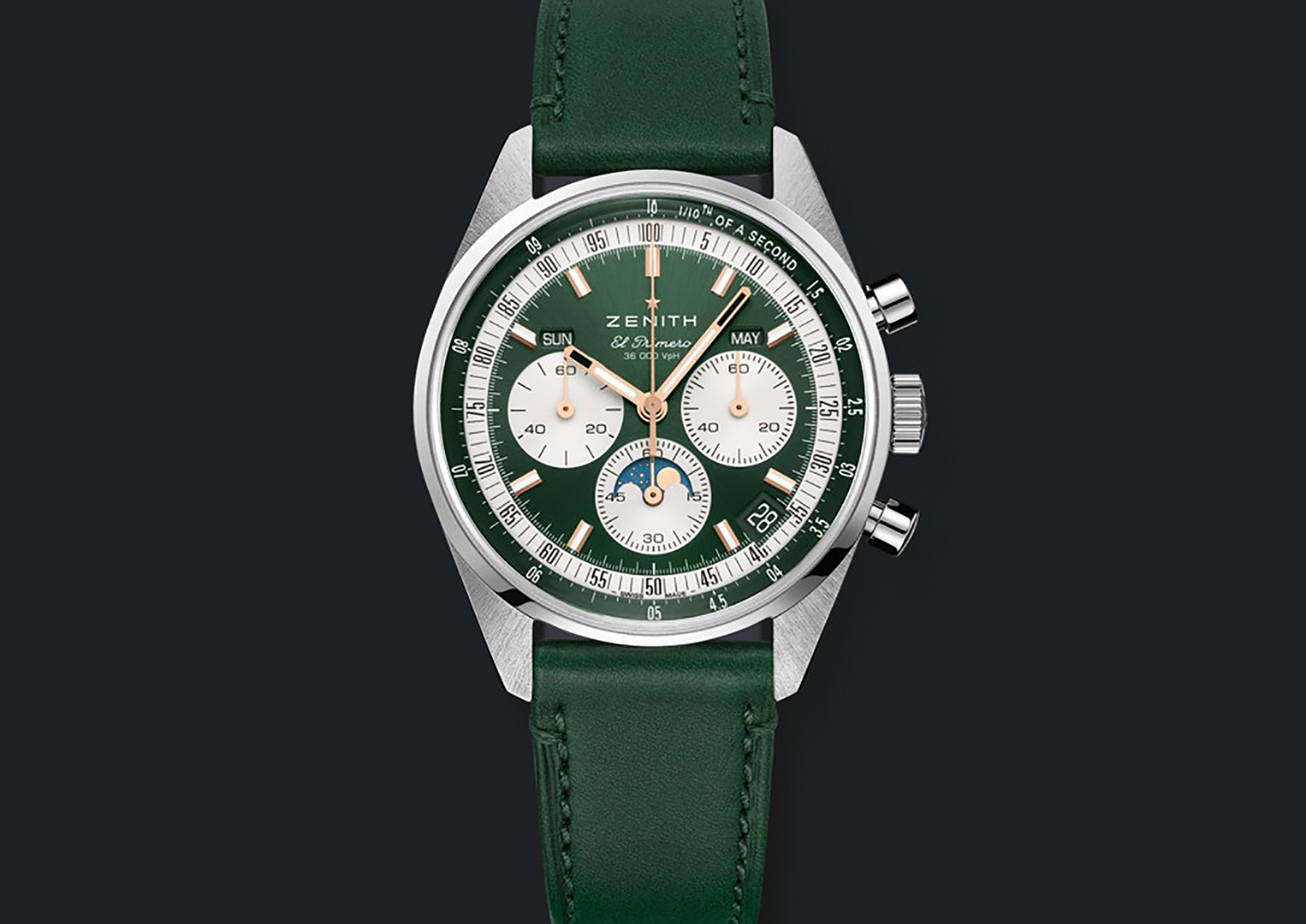
Zenith's legendary El Primero was the first self-winding chronograph
Now owned by the LVMH Group—the luxury goods conglomerate that also owns TAG Heuer and Hublot, among others—Zenith remains a cult favourite among watch collectors. Its extensive catalogue features everything from retro-looking versions of the aforementioned El Primero (the first automatic chronograph) to the cutting-edge Defy collection, where cases are fashioned from hard-wearing materials such as ceramic and carbon fibre.
Shop pre-owned Audemars Piguet watches
Shop pre-owned TAG Heuer watches
Shop pre-owned Vacheron Constantin watches
Shop pre-owned Breguet watches
Shop pre-owned Patek Philippe watches
Shop pre-owned Cartier watches
Shop pre-owned Panerai watches

